
The short version
This company builds garages. Detached two and three car garages, attached garages, workshops, and garages with a living space or office above. It is big ticket work, and nobody buys it on impulse.
Their crews were good and past customers loved them, but the website looked a decade old. It was slow on a phone, buried their best project photos and did not explain what a garage build actually involves.
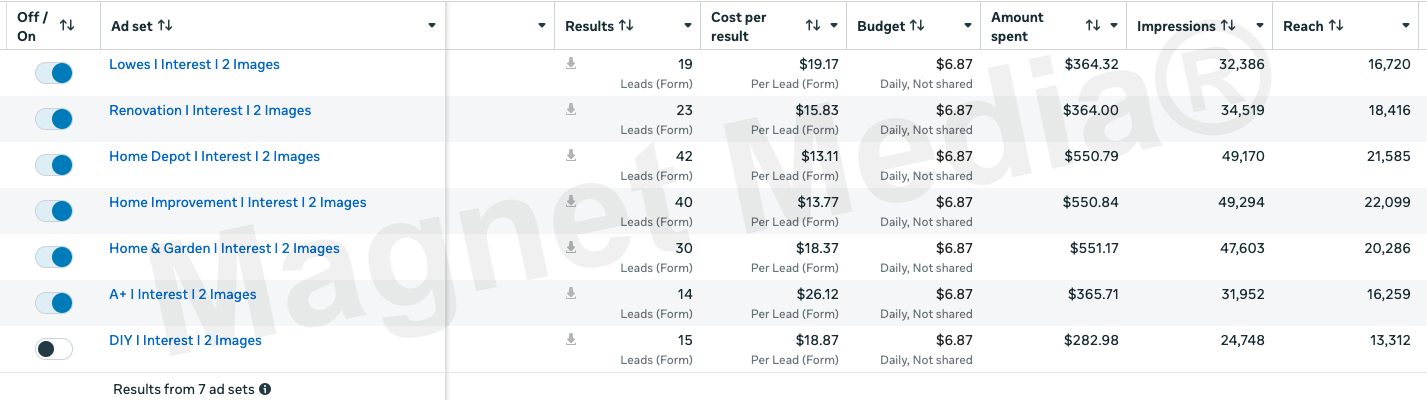
We rebuilt the site from scratch and then ran Meta ads to it. The campaign brought in 183 leads at $16.71 each on about $3,030 in spend. The best ad set ran at $13.11 per lead.
Why garages are a tricky thing to advertise
A new garage is one of the bigger projects a homeowner will take on. It means permits, a concrete pad, framing, a roof, doors and often power. People think about it for months, sometimes years, before they pick up the phone.
That means two things for ads. First, the people you want are not searching every day, so you need to find them through what they already care about, like home projects, tools and storage. Second, when they do click, they are going to check you out properly before they talk to anyone. If the website does not hold up, the ad money is wasted.
What the old site was missing
- It took several seconds to load on a phone, which is where nearly all ad traffic comes from.
- Every type of build was squeezed onto one page, so someone wanting a simple detached garage had to read about full renovations.
- The best garage photos were small and hidden on a gallery page.
- Nothing explained the steps from first call to finished build, which is the thing homeowners worry about most.
- The contact form asked for too much and had no clear next step.
What we built
The new site was live in 10 days. It had one job: turn someone daydreaming about a garage into a booked site visit.
Big project photos up front
Finished garages, wide and clear, right on the homepage. For a build like this, the photos are the sales pitch. People want to see the doors, the trim, the siding matched to the house.
A clear look at the process
A simple step by step section: site visit, design and quote, permits, pad, framing, finishing, walkthrough. Knowing what happens next takes a lot of fear out of a big project.
Pages for each type of build
Detached garages, attached garages and garages with space above each got their own section with photos and common questions, so every visitor found their project fast.
A short estimate form
Name, phone, the type of garage they had in mind and a short note. A tap to call button stayed at the top of every page on mobile.
Trust where it counts
Reviews next to the form, the service area spelled out, and licence and insurance details where people expect to find them.
The ads
Nobody types "garage builder" into Facebook. So instead of waiting for searches, we found homeowners through the interests that tend to come before a garage build. We ran ad sets side by side, each built around one interest group, each with the same two image ad:
Home Depot interest
People who follow and shop at big home improvement stores are often mid project or planning one. This turned out to be the strongest ad set at $13.11 per lead and earned the biggest share of the budget.
Renovation interest
Homeowners already thinking about improving their property. Steady results at $15.83 per lead.
Lowe's interest
Similar idea to Home Depot. It still worked, but cost more at $19.17 per lead, so it got less budget over time.
Home improvement interest
Close behind Home Depot at $13.77 per lead with 40 leads, the second strongest group.
Home and garden, DIY and A+ interests
Broader groups that added volume at $18 to $26 per lead. Useful for reach, but less efficient, so the DIY ad set was eventually switched off.
The ads showed real garages this company had built, with a simple message: custom garages built to match your home, with a free site visit to plan it. Every ad sent people to the new site, where the photos and the process did the rest.
Follow up
Every form on the site went straight to the office and sent the homeowner a text confirming the request. The office called back the same day to ask about size, use and timing, then booked a site visit.
Because the website had already explained the process, those calls were shorter and easier. Most people had seen the photos and knew roughly what to expect before the phone rang.
Results
The ads produced 183 leads at $16.71 per lead, with total spend of $3,029.81. The Home Depot interest ad set was the most efficient at $13.11 per lead.
From those leads the office booked 41 site visits and signed 9 garage builds within the first eight weeks. Several more were planned for the following season, which is normal for a project this size.
The site also started bringing in enquiries on its own from people who searched the company name after seeing an ad.
What worked
- Fixing the site before spending on ads. Every dollar landed somewhere that could turn a visitor into a lead.
- Reaching people through home improvement interests. Shoppers at big home stores were the best audience by a clear margin.
- Real garage photos. They did more selling than any headline could.
- Explaining the process. It made a big project feel manageable.
What we would change
We would move budget to the best interest groups sooner. The numbers were clear by the end of the second week, and a few more days on the weaker ad sets cost a little. We would also add a short video walking around a finished garage, because many leads asked about sizes and finishes that a video would have shown right away.
What other builders can take from this
If you sell big projects that people think about for months, you cannot rely on search alone. Find people through what they already care about, send them to a website that shows your work and explains the process, and call them back the same day. That combination kept this garage builder's schedule full.
Week by week
- Days 1 to 3
Old site reviewed, build types and service area mapped, garage photos collected.
- Days 4 to 10
New site designed, built and launched with project photos, the build process and a short estimate form.
- Week 3
Meta ads launched across several interest based ad sets.
- Week 4
Budget shifted toward the Home Depot and renovation audiences, which led on cost per lead.
- Weeks 5 to 7
Steady lead flow at $16.71 average. Site visits booked and builds signed.
The numbers
| Ad set | Leads | Cost per lead |
|---|---|---|
| Home Depot interest | 42 | $13.11 |
| Renovation interest | 23 | $15.83 |
| Lowe's interest | 19 | $19.17 |
| Home Improvement interest | 40 | $13.77 |
| Home & Garden interest | 30 | $18.37 |
| DIY interest | 15 | $18.87 |
| A+ interest | 14 | $26.12 |
| All ad sets | 183 | $16.71 |
People call us now already knowing what kind of garage they want and what our work looks like. Half the selling is done before I pick up.
Owner, garage building company
Questions people ask about this one
Can a garage builder really get leads from Facebook?
Yes. People planning a garage rarely search for one every day, but they do follow home improvement stores and renovation content. Reaching them there works well.
Should I build a new website before running ads?
If your current site is slow, hard to use on a phone or hides your best work, yes. Ads send people to your site, so it has to turn them into leads.
How long does a new website take?
Most of our sites go live in one to two weeks.
How much does a website cost?
Websites start at $30/month.
Why do garage leads take longer to close?
A garage is a big project with permits and planning. Many homeowners enquire months before they want to build, so good follow up over time matters.
Where do the ads run?
In our accounts, on Facebook and Instagram. We handle the setup, the creative and the day to day changes.